

Tucked deep in the vast, often snow-covered wilderness of Swedish Lapland lies a space center few have heard of—but one that could reshape Europe’s future in space. It’s not just rockets that launch from Esrange; it’s a bold vision of autonomy, sustainability, and innovation above the Arctic Circle. This is the story of how a remote outpost became one of the most advanced space test centers in the world.

A surprising location with strategic purpose
Just outside the mining town of Kiruna, Esrange has been a cornerstone of European space activity since its founding in 1966 by ESRO, the precursor to the European Space Agency (ESA). Its original mission was to study the Northern Lights and the upper atmosphere, leveraging its prime geographic location in the auroral zone and its convenient access by air, rail and road.

A Legacy of exploration
With more than 600 launches of suborbital sounding rockets and stratospheric balloons, Esrange has built a reputation over five decades as one of the most experienced launch facilities in the world. Since the early 1970s, Swedish Space Corporation (SSC) has managed the site, transforming it into a multi-functional space center capable of supporting scientific, commercial and now orbital operations.
Covering over 5,000 square kilometers of recoverable land, the facility offers unmatched space for high-altitude experiments, engine tests, and balloon campaigns. It also hosts one of the largest satellite ground station networks globally, supporting missions for space agencies around the world—proudly boasting itself as “the world’s most versatile space center”.

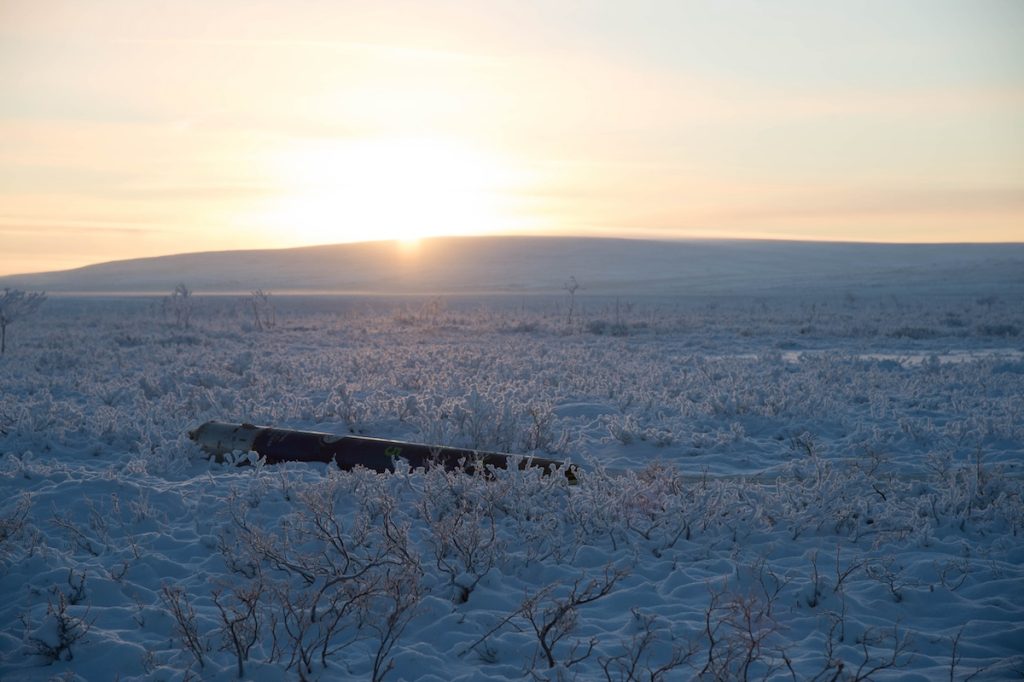
Esrange Space Center: Europe’s leap toward reusability
In recent years, Esrange has evolved to meet the demands of a shifting space landscape. With Europe seeking greater strategic autonomy in space, SSC initiated the creation of its facility at Esrange—a bold step toward enabling orbital launches from European soil. This new phase includes capabilities for reusable rocket testing, making Esrange the first site in mainland Europe equipped for such operations.
The centerpiece of this development is Launch Complex 3, a fully integrated facility designed for its initial customers’ projects. The Launch Vehicle Integration Building (LVIB) at LC3 is capable of hosting two separate clients simultaneously, with symmetrical sections named Asgard and Midgard, a nod to Norse mythology. ArianeGroup, a key player in Europe’s reusable rocket ambitions, will operate out of Asgard.
Testing Themis: pioneering reusability in Europe
One of the most significant projects currently underway at Esrange is the Themis test campaign—part of ESA’s programme and EU funded Horizon Europe project SALTO. Themis is a reusable first-stage rocket prototype developed by ArianeGroup. On a large 40 x 40meter launch pad, the Themis vehicle will soon begin testing vertical takeoff and landing, supported by a suite of infrastructure including gas tanks, fluid reservoirs and process plants, ground support robots, and technical containers.
This site, once an empty expanse, is now a thriving launch complex built to support Europe’s ambitions for reusability—aiming to reduce space debris, manufacturing expenditure and lower launch costs in the future.
A harsh yet advantageous environment
The Arctic location of Esrange offers several benefits. Its proximity to the poles makes it ideal for launching into polar and sun-synchronous orbits—critical for Earth observation, climate monitoring and defense. The surrounding area is sparsely populated and free from commercial aviation traffic—allowing for safe liftoff, downrange zones and engine testing with minimal risk.
The local conditions are not without challenges. With extreme temperature swings from -40°C in winter to +30°C in summer, eight recognized seasons, and periods of both 24-hour daylight and polar night, the climate requires adaptation of both humans and hardware. Still, the dry sub-Arctic environment offers more stable conditions than many coastal launch sites, allowing for more predictable planning of test and launch operations.

Respecting nature and culture
The surrounding forest landscape is home to reindeer and moose, and Esrange operates in coordination with local Sámi communities to ensure that space activities do not interfere with traditional herding routes. The reindeer are not just part of the landscape—they’re an integral part of the region’s cultural identity, protected under national law.
Aiming to be a guiding star in sustainable space operations, Esrange already uses renewable energy from hydro and wind sources and employs geothermal heating at its new launch facilities. These efforts reflect a broader commitment to environmentally responsible operations—both on Earth and in orbit.

Looking ahead
Esrange Space Center stands as a testament to adaptability and vision in the ever-changing world of space exploration. From atmospheric science to orbital launches, from balloon flights to reusable rocket testing, it has grown into one of the most versatile and strategically vital space centers in the world.
And while the landscape may be rugged, the mission is clear: to push the boundaries of what Europe can achieve in space, sustainably and independently.