
Technologies developed and tested during the SALTO project
- Discover news technologies used on T1H
Advancing the Future of Reusable Launchers
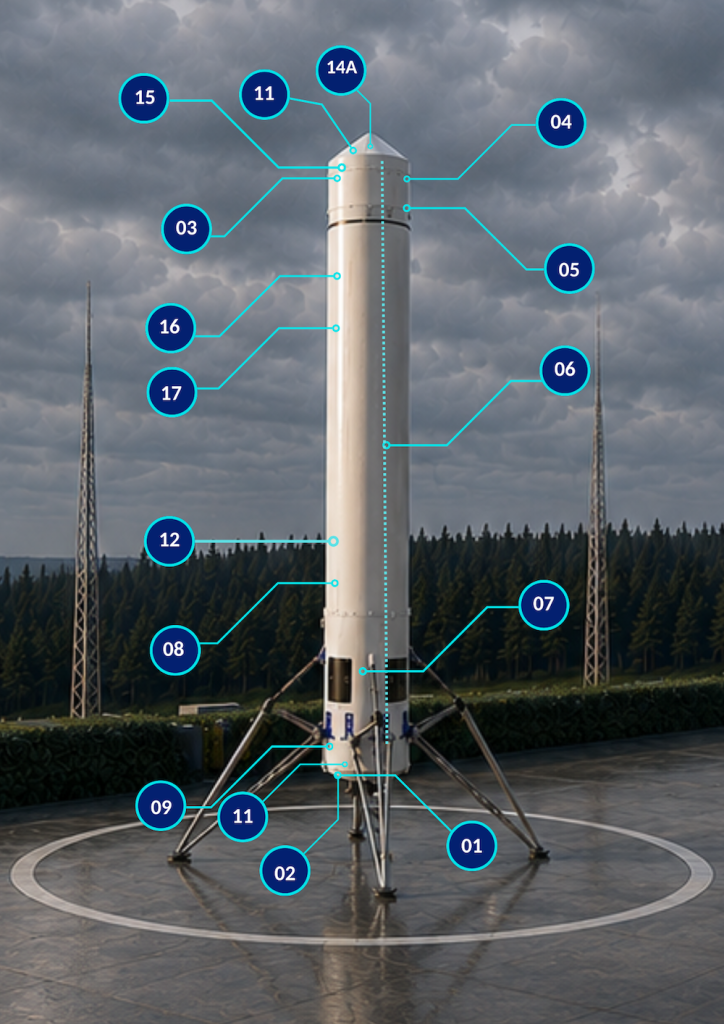
This is an illustrative image of T1H.
01. Innovative bio-sourced thermal protection system, applied onto replaceable PEEK tiles substrate | Amorim Cork Solutions
02. Removable thermal back shield | ID CONCEPTS
03. Launcher video camera system development | REALTRA
04. Autonomous flight termination system | Thales Alenia Space
05. Hybrid navigation system | DLR & Indra Space
06. Aerodynamics/ aerothermodynamics & flying qualities | DLR
07. Ultra-low cost TVAS (Thrust Vector Actuation System) | SABCA
08. Optimized MEB (multi-engine bay) manufacturing & inspection/maintenance | SABCA
09. Health and usage monitoring system (HUMS) technologies /Structural health monitoring | ONERA
10. Ground autonomous flight safety system* | GTD
11. Landing Guidance, Navigation & Control | ArianeGroup
12. Multi-engine bay adaptation and equipping | ArianeGroup & SABCA
13. Remote operations with robots* | ArianeGroup
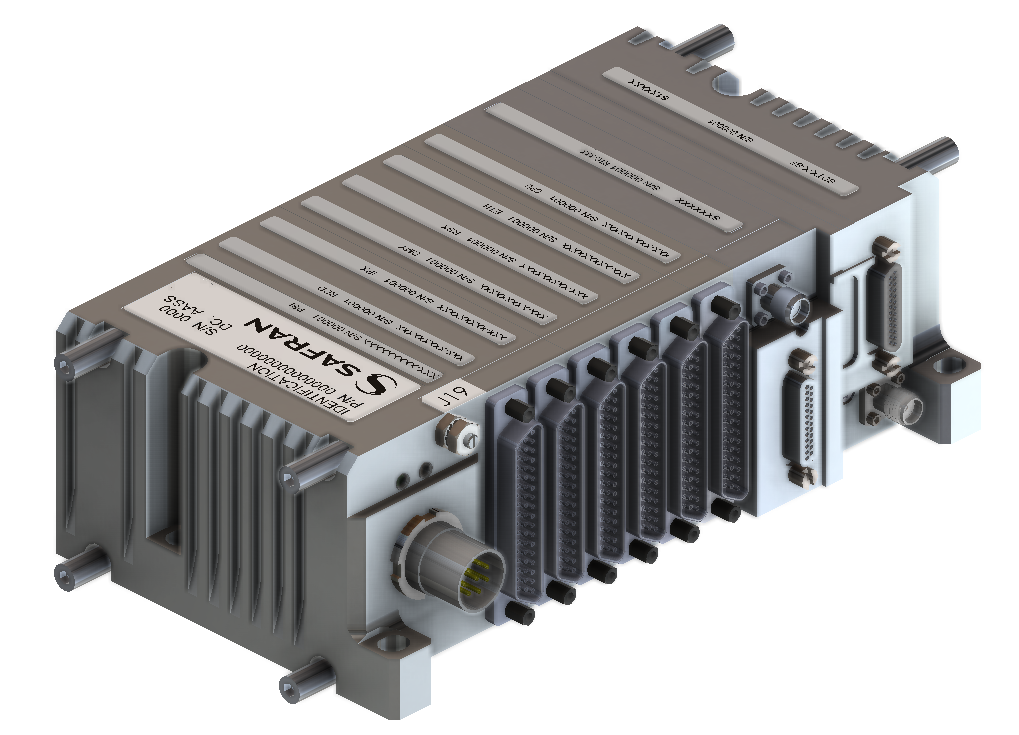
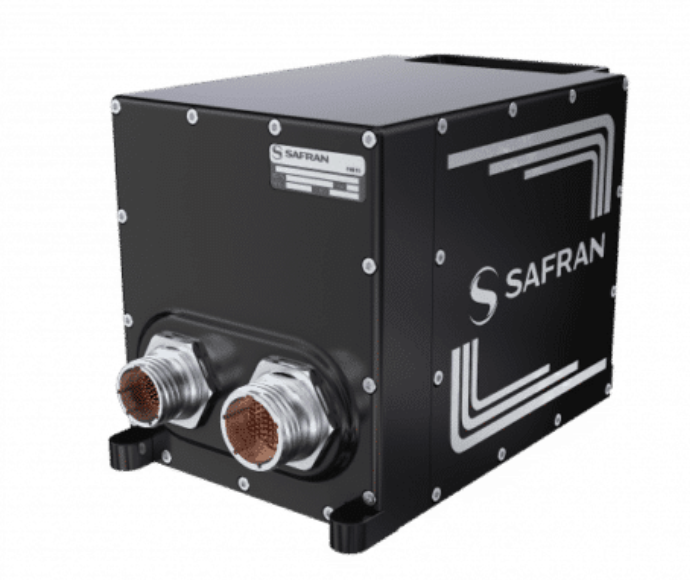
14A. Onboard shipset (CMA + INS) | Safran
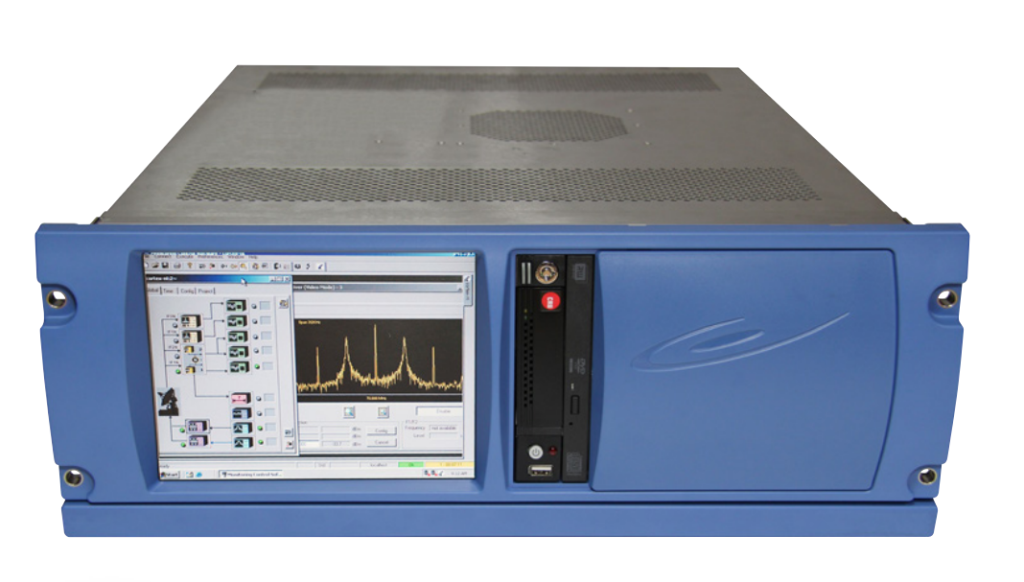
14B. Embedded test experiment – ground equipment, monitoring and antenna* | Safran
15. Wireless communication | ArianeGroup
16. Post-flight automated evaluation | Indra Space
17. Flight Dynamics and Navigation HMS (Health Monitoring System) | Indra Space & DLR
*These technologies are part of the ground segment, supporting launch operations from Earth rather than operating onboard the vehicle.
Description of Technologies
01. Innovative bio-sourced thermal protection system, applied onto replaceable PEEK tiles substrate
Amorim Cork Solutions developed an innovative bio-based thermal protection system (TPS) for reusable launchers, combining high performance with sustainability and easy maintenance.
The solution is based on cork, a natural material with a unique cellular structure that together with its inherent low density and excellent thermal insulation, it has strong ablation properties, meaning it absorbs heat and forms a protective char layer under extreme temperatures – making it particularly suitable for aerospace applications such as launch and re-entry.
Building on this, SALTO advances a new-generation TPS material that is 100% bio-based, lightweight, and compatible with modular, easy-to-replace tile system. This is a key innovation, as current high-performance TPS solutions (e.g. ceramic or carbon-based materials) are often energy-intensive to produce, costly, and difficult to integrate into reusable systems.
The development followed an iterative methodology, including material formulation, testing and industrial-scale up validation. The material has been tested under extreme thermal conditions, to ensure technical performance and suitability for real operational environments.
By combining sustainability, easy replaceability and performance, the SALTO cork-based TPS contributes to labour costs reduction, improved reusability, and lowering the environmental footprint of space transportation systems, supporting the transition towards more sustainable and competitive European launch technologies.
More information about this technology and partner


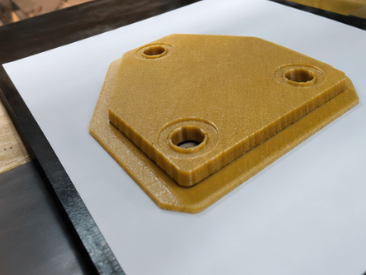
02. Removable thermal back shield
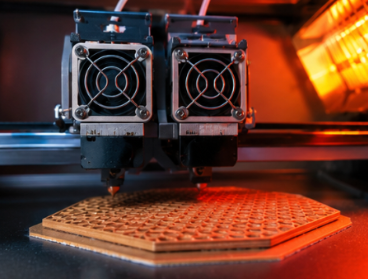
During the SALTO project a new removable thermal protection system (TPS) based on proven cork-based solutions combined with a lightweight tile and flexible interfaces, allowing easy access to the launcher structure is being developed.
The use of 3D-printed tiles enables high design flexibility, allowing variations in shape without increasing cost. A standardized mounting system ensures that tiles are easy to install, remove, and replace, supporting efficient maintenance and reuse of launchers. In addition, the cork can be replaced without changing the tiles, increasing the lifespan of the TPS.

03. Launcher video camera system development
An advanced onboard camera system is developed to enhance in-flight monitoring capabilities. The system integrates global shutter sensors, efficient H.265 compression, and reduced size, mass, and power consumption. It enables flexible configuration of field of view, lens selection, frame rates (including high-speed >100 fps), and adaptive illumination. Enhanced image quality is achieved through wide dynamic range, ensuring reliable performance under rapidly changing lighting conditions. Precise timestamping allows synchronisation with onboard sensors, supporting detailed post-flight analysis. These improvements build on the existing Réaltra system, delivering higher-quality, more efficient, and mission-adaptable HD video telemetry.
The Réaltra secure Ethernet Network Switch was also used to route up to 12 channels of Ethernet data into the launcher storage system.
More information about this technology and partner

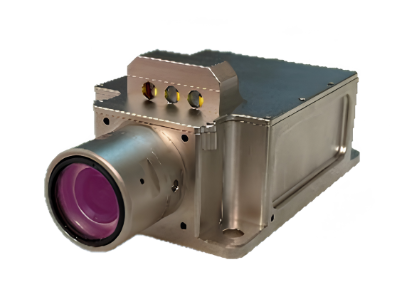
04. Autonomous flight termination system
Within SALTO, a simplified and autonomous system is developed to achieve performance equivalent to current solutions. A first version of the autonomous software is validated in real conditions, using in-flight data to continuously improve performance for subsequent flights.

05. Hybrid navigation system
Hybrid Navigation Systems (HNS) – which combine inertial sensors and GNSS localization for a full 6-degrees-of-freedom (6-DoF) navigation – are not yet used for European launch vehicles. With the concept of reusability, pure Inertial Navigation System (INS) is not sufficient anymore and a hybridisation is needed to meet the navigation performance requirements for the return flight, approach and landing.
In SALTO, the HNS is adapted from previous flight experiments and demonstrated for the new application in Themis and for the derived future reusable launch vehicles. The development of HNS encompasses hardware (like IMU, GNSS, navigation computer, data recorder) as well as flight and ground software. The HNS is modular and allows including other sensors and alternative GNSS receivers, as the G3Star developed by Indra Space, in the navigation processing. This enables the flight testing of a new configuration within Themis.


06. Aerodynamics / Aerothermodynamics & flying qualities
The analyses of aerodynamics (pressures and resulting aerodynamic forces on the vehicle) and aerothermodynamics (heating of the vehicle due to external flow) as well as flying qualities (dynamic behaviour and manoeuvrability of the vehicle) are the key, must-have elements of the design of any space transportation system. They encompass both the ascent and the descent (incl. retro-propulsion) phase of the flight.
Within SALTO, the analyses complement the detailed design of the vehicle’s aeroshape, which includes critical subsystems such as multi-engine bays, aerodynamic control surfaces, braking devices, landing legs; and strongly influences the overall flight mechanics performance. This technology is important for advancements of the design of reusable launchers by improving the understanding of aero- and aerothermodynamic behaviour as well as retro-propulsion flows for the vertical take-off, vertical landing (VTVL) vehicles.
More information about this technology and partner
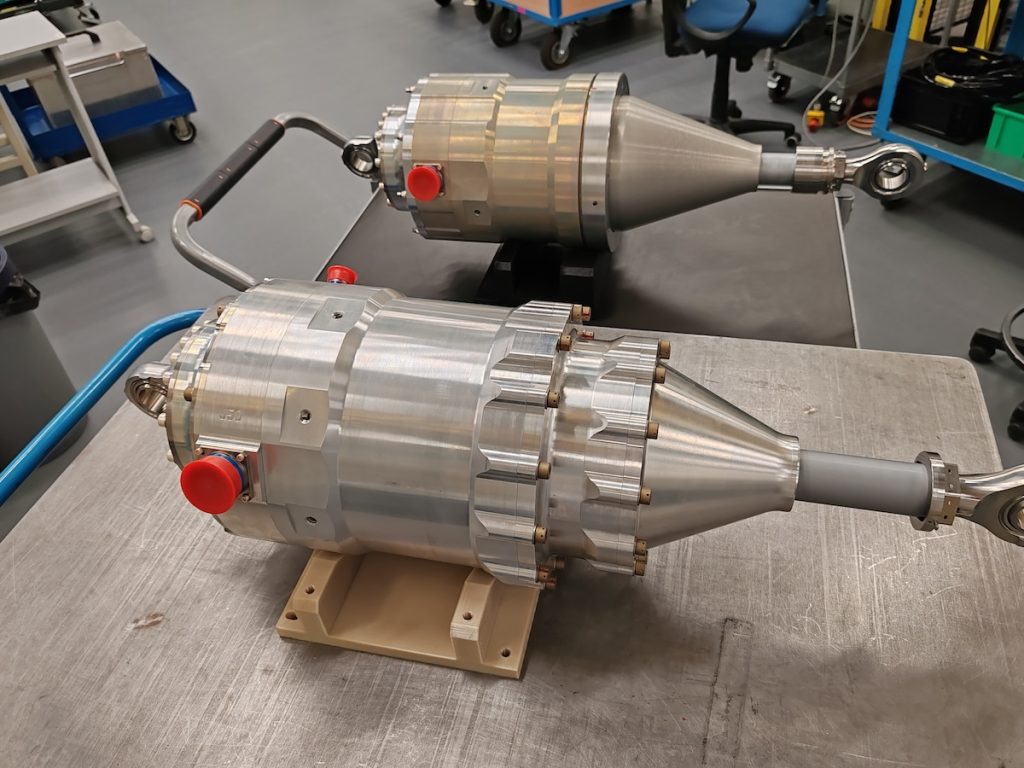
07. Ultra-low cost TVAS
Within SALTO project, an adapted generation of electromechanical actuators for Thrust Vector Control is being developed to address key challenges in cost, reliability, and reusability. The approach focuses on low-cost industrialization, integration of Health and Usage Monitoring Systems (HUMS) and Built-in Self-Test capabilities inspired by civil aviation, and optimization of the avionics architecture. The system is also designed to withstand new load conditions, including side and fallout loads, and to operate under demanding thermal environments, supporting robust and reusable launcher performance.

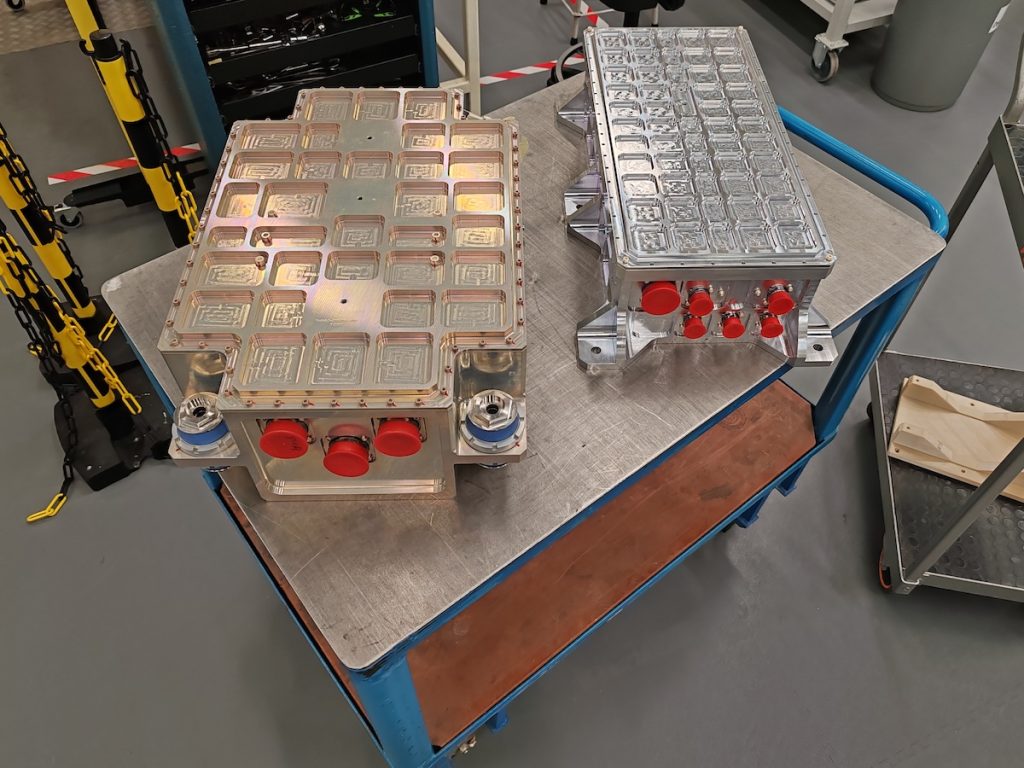
08. Optimized MEB manufacturing & inspection/maintenance
In the scope of SALTO project, SABCA will investigate and apply optimized manufacturing techniques focused on the AGS future launcher development which includes the specificities of a future European launcher family. It also considers the inspection & maintenance tasks necessary for a re-use after launch and recuperation of this kind of structure.
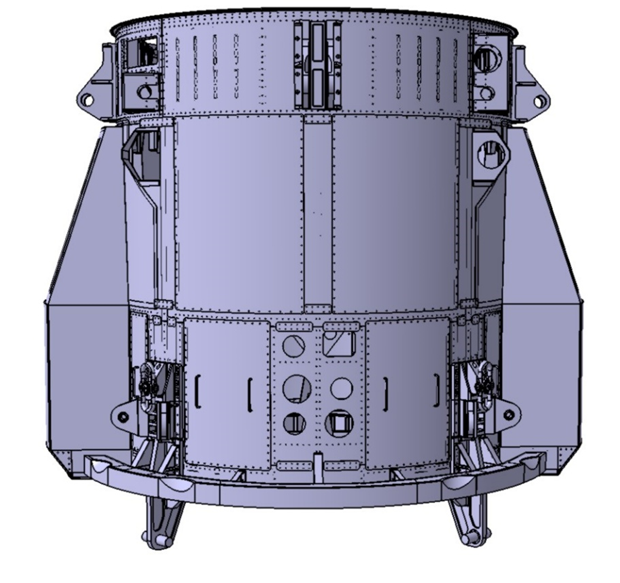
09. Health and usage monitoring system (HUMS) technologies / Structural health monitoring
Maintenance in aerospace systems is traditionally based on preventive approaches with large safety margins. With the increasing availability of embedded sensors, there is a shift toward condition-based maintenance supported by Remaining Useful Life (RUL) estimation. Within SALTO, advanced monitoring methods are developed to assess subsystem health and predict degradation using both data-driven and model-based approaches. The focus is on structural monitoring, combining experimental data and modelling to extract key information (e.g. damage detection and crack growth), enabling more efficient and reliable maintenance strategies.

10. Ground autonomous flight safety system
Flight Termination Systems (FTS) are critical for launch safety, traditionally relying on ground-based systems and human operators to monitor missions. However, this approach is time-consuming, costly, and not suited to the flexibility required by reusable launchers. Within SALTO, a Ground Autonomous FTS (AFTS) is developed to replace human-in-the-loop decision-making, reducing costs, minimizing human error, and increasing launch flexibility. This technology lays the foundation for future certified on-board autonomous safety systems for next-generation European launchers.
More information about this technology and partner

11. Landing Guidance, Navigation & Control
In Europe guidance, Navigation and Control (GNC) solutions suitable for reusable launchers are not yet available.
Within SALTO, ArianeGroup is advancing scalable GNC technologies – applicable from small to large vehicles – to enable precise landing and ultimately support the reuse of European launchers.

12. Multi-engine bay adaptation and equipping
In the scope of the SALTO project, improved performance at reduced cost is sought through the smart combination of advanced manufacturing technologies. The objective is to identify the optimal mix of solutions that minimise material use, maximise automation, and deliver lightweight, high-performance structures.
It integrates technologies such as closed-cell extrusion, friction stir welding, fibre-reinforced plastics, and 3D printing for the manufacturing of the multi-engine bay structure. A key enabler is the patented flux distribution system, which allows more localised reinforcement and improved use of structural materials, enhancing overall efficiency and performance.
13. Remote operations with robots
Within SALTO, robotic solutions are being developed to enable safe and automated pre-flight and post-landing operations.
14A. | 14B. Embedded SALTO Hop Test experiment: Onboard shipset (CMA + INS) and ground equipment, monitoring and antenna
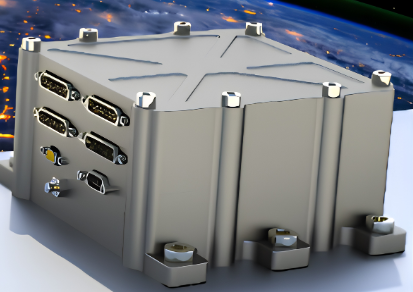
For the hop test, an onboard shipset has been designed for the launch. It is composed of one SED COTS INS (hybrid Inertial/GNSS Navigation System), and one SDS COTS multi-module CMA (Multi Acquisition Encoder).
The CMA encoder is equipped with
- An Ethernet acquisition module to retrieve positioning data from the onboard INS,
- A RF Receiver module prototype that receives data from ground during flight through onboard S-Band Antenna,
- An aggregation module to aggregate all onboard data,
- A Recorder module to record data onboard,
- A Transmitter module to send data to the ground during the flight.
On ground, a Cortex Telemetry receiver will receive data, demodulate them and record them. A ground Transmitter will send time-stamped data to the launcher. This will enable us to determine the latency and integrity of the bidirectional link during the hop test.

15. Wireless communication
ArianeGroup GmbH and the DLR Institute of Space Systems are advancing in innovative wireless communications. The primary goal of this endeavor is to replace traditional wired communication links with advanced wireless technologies, thereby enhancing the flexibility, reliability, and maintainability of space missions. Communication links in space systems play a critical role in ensuring reliable, robust, and deterministic communications for both onboard operations and ground-to-board interactions during launch pad procedures. Although industrial wireless sensor networks partially address these needs, ArianeGroup GmbH and the DLR Institute of Space Systems aim to overcome their limitations by enabling more reliable, high-performance wireless communication using ultra-wideband (UWB) technologies for future space systems.
16. Post-flight automated evaluation
The automated Post-Flight Analysis Tool (PFAT) developed by Indra Space is used for trajectory reconstruction of hop tests, enabling validation with real flight data. This supports its future adoption as a baseline PFA tool for operational missions, in line with ESA objectives.
17. Flight Dynamics and Navigation HMS (Health Monitoring System)
Redundant navigation sensors ensure robustness during flight by enabling Failure Detection, Isolation, and Recovery (FDIR) in case of individual sensor faults. However, detecting sensor degradation across multiple flights remains a challenge. Also, detection of deviations with respect to the expected flight dynamics is necessary to ensure safety during the mission. Within SALTO, advanced health monitoring approaches for Navigation and Flight Dynamics are developed by analysing flight data to assess deviations, failures, outages, and progressive degradation. This combines model-based H-infinity FDIR techniques with supervised and unsupervised machine learning, enabling more reliable and reusable flight systems.