
Technology maturation during the SALTO project
- Technologies that are matured during SALTO project and planned to be used on T3
Advancing the Future of Reusable Launchers

This is a conceptual and illustrative image of T3, not approved design.
01. Autogenous pressurization (GOX / GCH4) | Avio
02. Europaean VPX board | GL Electronic
03. 4.0 Launch base mission system demonstration * | GTD
04. Removable thermal back shield | ID CONCEPTS
05. Low-cost grid fins structure | SABCA
06. Grid fins actuator system | SABCA
07. Space-based telemetry | SENER
08. Green flip control system | SpaceForest
09. Green attitude control system | ArianeGroup
10. Propellant management | ArianeGroup
11. Low cost, innovative navigation sensor suite proof concept* | Safran
12. Landing system design evolution from T1H to T3 | MT Aerospace
13. Automated launch erector design* | MT Aerospace
14. Ultra low-cost lightweight tank | MT Aerospace
15. Landing Guidance, Navigation & Control | ArianeGroup
16. Multi-engine bay adaptation and equipping | ArianeGroup & SABCA
17. Modular power Avionics (MPU) | GMV
18. Thrust management functions | Indra Space
19. Guidance, Navigation and Control for reusable launchers | Indra Space
*These technologies are part of the ground segment, supporting launch operations from Earth rather than operating onboard the vehicle.
Description of Technologies
01. Autogenous pressurization (GOX / GCH4)
AVIO and ArianeGroup Germany are advancing autogenous pressurization technologies as an alternative to conventional tanks pressurization systems. Instead of relying on inert gases stored in separate high-pressure vessels, this approach uses self-generated gaseous propellant to pressurize the liquid propellant tanks. This innovation offers significant advantages in terms of system efficiency, mass reduction, and overall launcher performance. However, full autogenous pressurization has not yet been implemented in Europe, making this development a key step toward more efficient and competitive European launch systems.
AVIO has designed the subsystem, providing evidence of the required performance through testing and analysis.

02. European VPX board
In the scope of SALTO project GLE has developed VPX card designs based on the OpenVPX VITA standards. VPX cards offer cutting-edge performance and reliability across a wide range of mission-critical applications in the space, aerospace and defence industry. The VPX card technology introduces a modular, standardized approach to high-speed computing and data acquisition in demanding environments.
More information about this technology and partner


03. 4.0 Launch base mission system demonstration
New commercial spaceports aim to support multiple launchers using shared and standardized infrastructure. Within SALTO, building on SAMMBA developments, Industry 4.0 technologies are applied to spaceport operations to reduce costs, shorten campaign duration, and increase launch rates. Validation of selected modules during real micro-launcher campaigns will advance these solutions to TRL6, bringing them closer to commercial deployment in next-generation spaceports.
More information about this technology and partner

04. Removable thermal back shield
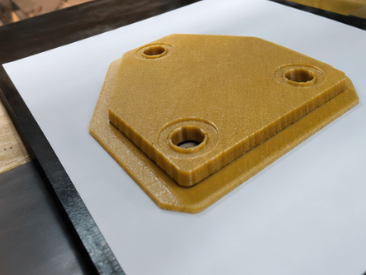
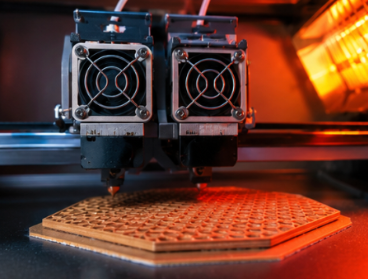
During the SALTO project a new removable thermal protection system (TPS) based on proven cork-based solutions combined with a lightweight tile and flexible interfaces, allowing easy access to the launcher structure is being developed.
The use of 3D-printed tiles enables high design flexibility, allowing variations in shape without increasing cost. A standardized mounting system ensures that tiles are easy to install, remove, and replace, supporting efficient maintenance and reuse of launchers. In addition, the cork can be replaced without changing the tiles, increasing the lifespan of the TPS.

05. Low-cost grid fins structure
Advanced manufacturing using Wire-based Direct Energy Deposition (DED) is extended beyond thin-walled structures toward hybrid, large-scale aerospace components. The approach integrates the base plate as part of the final structure and optimizes processing conditions for improved performance and manufacturability. Key advancements include enhanced geometrical control, improved material properties, and increased deposition efficiency. To address challenges such as distortion in larger structures, SALTO also refines residual stress prediction tools, enabling more reliable and high-quality production of complex aerospace components.


06. Grid fins actuator system
In the scope of the SALTO project, a low-cost electromechanical actuator design for grid fin control is being developed, advancing European capabilities beyond current preliminary designs (e.g. CALLISTO, RETALT). Unlike existing hydraulic solutions used outside Europe, this approach enables higher efficiency, reduced complexity, and strong commonality with thrust vector control systems, supporting more integrated and cost-effective reusable launcher designs.
07. Space-based telemetry
Current telemetry systems for space launch operations have limited data rates and require an extensive set of ground based sites that are expensive to maintain and operate. These systems are not able to meet the requirements of future missions: higher data rates and trajectory tracking for reusable launchers. The new generation telemetry systems will be capable of transmitting the data streaming directly to ground stations (direct-to-ground connectivity) or to a geosynchronous satellites constellation, which then relay the signal to the telemetry ground stations. The proposed antenna architecture provides high gain to increase the user data rates and dynamic pointing for operational flexibility. Besides, the antenna is designed with highly integrated technologies becoming a very low profile and compact antenna that can be easily integrated in a launcher for very low aerodynamic perturbation.

08. Green flip control system
Within SALTO, a hybrid secondary propulsion system was developed to TRL 5, to enable flip manoeuvres for reusable launchers. The mass of the system based on hybrid propulsion is about four times smaller than of a corresponding cold-gas one. Within the scope of SALTO, technology of type III spherical composite tank for the oxidiser was developed and successfully tested. Design, production and testing of a lightweight, composite combustion chamber of the hybrid propulsion system was the main part of activities. A series of Computational Fluid Dynamics calculations and hot-firings was done to optimise the design. A dedicated test stand, together with a complete hydraulic system were developed and used in the test campaign. Finally, a series of functional tests (hot-firings) of the whole system (tank, hydraulics, thruster, test stand) was conducted, as well as additional tests of some parts of the system (tank, igniter, combustion chamber), proving that the system is capable of fulfilling the requirements.



09. Green attitude control system
Within SALTO project, ArianeGroup designed and developed a green propellant equipment for ACS. The propellant chosen is hydrogen peroxide (H2O2). Compatible thruster and Tank were developed in the frame of the project. Two thrusters were successfully hot fire tested at sea level and proved excellent performance. Off-the-shelf BT-01 Tank was produced with modified Standpipe to be compatible with H2O2 and produced and tested according to qualified acceptance test procedure.

10. Propellant management
Within the propellant management activities in SALTO, functional equipment was developed for each tank, namely diffusor and Anti-Vortex Devices (AVD). These devices were developed according to the specification of future demonstrator. Additionally, a level sensor based on electrical capacitance tomography (ECT) technology was developed and manufactured to be tested on future demonstrator for one tank. This new technology could permit to have a continuous propellant measurement under low gravity condition.
11. Low cost, innovative navigation sensor suite proof of concept
Within SALTO project and using former studies (trials at DGA TT among other things), it has been demonstrated in simulation that using positioning data from a PASEO, the centimetric accuracy can be achieved.
PASEO: COTS long range panoramic targeting sight for land vehicles PASEO is a latest-generation very-long-range observation.
It has been demonstrated that an Inertial Navigation system embedded in a Themis launcher demonstrator is capable to update the computed location for the final landing system using optronics systems on the ground. The bidirectional datalink experimentation has validated the ability to acquire and transmit data with high level of integrity and controlled latency. The solution, primarily composed of Safran COTS benefits from recent technologies that allow for industrialization for landing sites or on barges (with additional studies required in the latter case), while addressing the challenges of sovereignty and communications security.

12. Landing system design evolution from T1H to T3
In SALTO project one of the MTA’s objectives is to proceed with the first iteration of 1 full scale leg with integrated structural aero shell. As design authority, MTAE develops and manufactures parts of the leg in Carbon Fiber Reinforced Plastic for weight optimization. With a full European sourcing supply, the leg incorporates the deployment system into a cover which provides an aerodynamical advantage to the propellant consumption of launcher.
More information about this technology and partner


13. Automated launch erector design
In a global approach, MTA investigates launch workflows and reusability matter for reducing operating costs.
An erector, used as transport system for the different locations and as jigs in the assembly building, provides significant advantage in terms of simplification of operations, reduction of risks and reduction of cost regarding the conventional possibilities.
MTA develops commonly with the partner GTD an automated scaled erector demonstrator, which can be operated remotely (L= approx. 3mm) to validate the improved functionalities.

14. Ultra low-cost lightweight tank
As design definition authority, MTA develops an 18m long dual tank for dedicated propellants (LOX and LCH4) in stainless steel for reusability and cost reduction purposes. With optimization of wall thickness for weight reduction, MTA investigates the design related to the load cases, interfaces and reinforcements for integration purposes, which is planned to the next development. Additionally, MTA trades off some manufacturing processes and validates material characteristics by the manufacturing of a demonstrator.
15. Landing Guidance, Navigation & Control
In Europe guidance, Navigation and Control (GNC) solutions suitable for reusable launchers are not yet available. Within SALTO, ArianeGroup is advancing scalable GNC technologies – applicable from small to large vehicles – to enable precise landing and ultimately support the reuse of European launchers.
16. Multi-engine bay adaptation and equipping
Within SALTO, improved performance at reduced cost is sought through the smart combination of advanced manufacturing technologies. The objective is to identify the optimal mix of solutions that minimise material use, maximise automation, and deliver lightweight, high-performance structures.
17. Modular power Avionics (MPU)
The MPU supports all the vital functions of Themis demonstrator and is requested to develop functional hardware product that will be used for testing. Building on the PCDU developed by GMV for the T1H demonstrator, SALTO advances a Modular Power Unit architecture for future reusable launchers. The MPU combines power conditioning, distribution, protection, and health monitoring functions within a scalable and fault-tolerant modular design. The solution improves maintainability, supports rapid subsystem replacement and upgrades, and enables more efficient reuse of launch vehicles while reducing operational costs.


18. Thrust management functions
Thruster Management Functions (TMF) are required in clustered rocket engines that are gimballed and/or throttled to correctly manage the control action among the multiple actuators while at the same time avoiding contact between the different engines’ nozzles. State-of-the-art techniques are available but imply a significant loss of control authority in case of failure. Indra Space developed a novel TMF solution based on Multiparametric Quadratic Programming that enables an optimal, full-efficient, and fault-tolerant nonlinear control allocation for launch vehicles with multiple gimbaled engines. The TMF that was successfully tested in a Future Launcher configuration, which is representative of potential future reusable launcher configurations.

19. Guidance, Navigation and Control for reusable launchers
In SALTO, Indra Space developed an end-to-end GNC solution for recovery of a reusable first stage by means of a vertical landing. This solution allows to continuously and smoothly guide and control the reusable booster from the separation from the second stage, after main engine cut-off, thought the complete return sequence. After a ballistic phase, in which a flip over manoeuver is performed, the GNC control the vehicle during the boostback burn (in case a return to launch site is targeted), re-entry burn, aerodynamic entry, and finally precise landing. Novel techniques based on online-optimised Guidance, robust Control and hybrid Navigation are implemented. The proposed GNC has been tested in return scenarios of the Future Launcher configuration, and adapted and tested also for a sub-orbital flight test of a reusable booster. Model-in-the-loop and processor-in-the-loop test campaigns were carried out to evaluate the GNC performance and identify critical points toward its application in a potential future reusable launcher.